Lending a Hand to Humanoids


Hey! We'd love to hear your thoughts, send us a voice note.
What if you could command a fleet of robots with nothing more than a flick of your wrist? A Stanford PhD pioneer and his former student-turned-CEO join us to reveal how wearable gesture technology is about to transform the way humans and machines work side by side.
Professor Luis Sentis, one of the first in the world to earn an end-to-end PhD in humanoid robotics, and Heeyong Huh, founder of Suhwa, sit down with hosts Jennifer Kaehms and Andrea Kalmans to trace the evolution of humanoid robots from $10 million lab curiosities to affordable $25,000 productivity tools. They explore how Suhwa's wearable wristband technology reads neuromuscular signals to translate natural hand gestures into digital commands, why gesture-based interaction could outpace voice and keyboards in spatial computing environments, and how smart glasses, AR, and AI are converging to reshape factory floors, military missions, and everyday life. Along the way, they discuss the ethics of human-robot collaboration, the journey from academia to entrepreneurship, and their shared vision for a future where robots empower small businesses rather than replace workers. It's a conversation about accessibility, upskilling, and making technology feel as natural as a conversation, all happening right here in Austin, Texas.
Subscribe to America's Angels and join the conversation! Leave a comment with your thoughts on gesture-controlled robotics, share this episode with a fellow tech enthusiast, and hit that follow button so you never miss an episode.
00:00 - Introductions
01:24 - What Is a Humanoid?
07:27 - The Evolution of Humanoid Robotics
11:31 - Heeyong's Journey to Robotics
18:12 - Suha's Technology & IP
21:30 - From Academia to Entrepreneurship
23:00 - Spatial Computing: Gestures vs. Voice
31:42 - Smart Glasses & Market Strategy
33:27 - NSF I-Corps & What's Next
36:54 - Ethics & Future of Human-Robot Interaction
43:27 - Closing Remarks

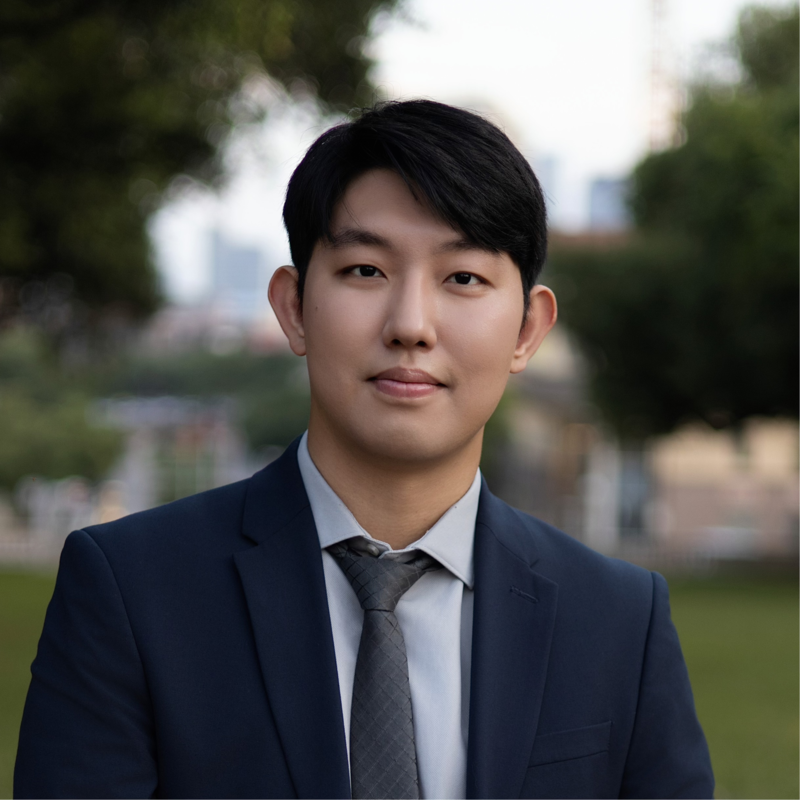
CEO
Heeyong Huh, PhD, is the founder and CEO of Suhwa, a wearable technology company developing intuitive interfaces for interacting with AI and digital systems. He earned his PhD from The University of Texas at Austin, where his research focused on wearable sensing, electrophysiology, human–machine interaction, and emerging human-centered technologies. His work has spanned the development of advanced wearable systems and their application to real-world challenges in human performance and intelligent interfaces. Building on this research background, he founded Suhwa to translate advances in wearable sensing and signal processing into practical, scalable technologies for next-generation computing platforms, including AI wearables, spatial computing, and connected devices.